“There is probably no more original, more complex, and bolder concept in the history of ideas than Darwin’s mechanistic explanation of adaptation.”
– Ernst Mayr, The Growth of Biological Thought (1982), p. 481
The Argument from Design
Charles Darwin (1809–1882), one of the many grandchildren of Erasmus Darwin (himself a figure who merits a separate essay), gave the world something that is genuinely difficult to appreciate in hindsight: a natural mechanism, backed by evidence drawn from fossils, domesticated animals, biogeography, and comparative anatomy, that explains the gradual appearance of organismal traits across geological time. The last paragraph of On the Origin of Species has sent thousands of people, this author included, down the road of studying life in all its diversity.
The theory’s most immediate target was an idea with deep roots. The argument from design, traceable at least to Socrates and most influentially articulated by William Paley in his 1802 Natural Theology, held that the complexity and apparent purposefulness of biological structures could only be explained by the action of an intelligent designer. Darwin put it plainly in his Autobiography: “We can no longer argue that, for instance, the beautiful hinge of a bivalve shell must have been made by an intelligent being, like the hinge of a door by man.” The argument from design was rendered unnecessary.
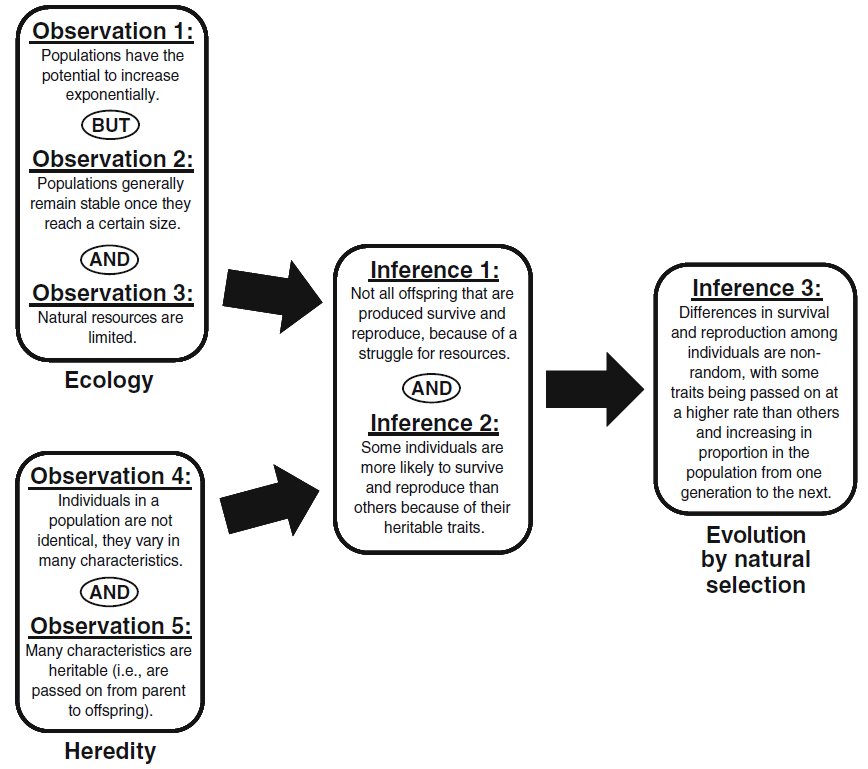
Figure 1. Illustration of natural selection. From Gregory (2009).
Herbert Spencer supplied the phrase that has since become shorthand for the mechanism: “survival of the fittest”, coined in his Principles of Biology (1864) in the context of free-market economics, before Darwin incorporated it from the fifth edition of the Origin onward. Spencer was a liberal politician and sociologist, not a biologist, which perhaps explains why the phrase fitted both contexts so comfortably. Stripped of its nonbiological connotations, it captures something real: natural selection is a filter, preserving what Darwin called “favourable variations” and eliminating injurious ones. These variations, within a single generation, are slight: a fractionally larger eye, longer legs, a coloured patch on a wing. Darwin’s particular insight was to recognise that this process has been running continuously since life first appeared, and that geological time provides the necessary depth for its cumulative effects to become arbitrarily large. Organisms that survive to reproduce will, over sufficient time, appear to have been designed, precisely because the ones that looked poorly designed are no longer present to complicate the picture.
Darwin’s standing in the history of science is sometimes overstated through hagiography and sometimes understated through contrarianism, but the basic comparison holds: his intellectual impact belongs alongside Copernicus and Newton. Copernicus’s 1543 De Revolutionibus Orbium Coelestium established that natural laws govern the universe; the Origin established that natural laws govern the biosphere. Both precipitated crises of religious authority for the same reason: neither leaves conceptual space for a special creative act. Darwin was completing, for biology, the programme that astronomy, physics, chemistry, and geology had been advancing for two centuries.
Pre-Darwinian Evolutionary Thought
To credit Darwin with the discovery of evolution is to misread the history. Ideas about common descent and transmutation (the period term for what Darwin called descent with modification) had been circulating for decades. The pre-Darwinian transmutationists include Jean-Baptiste Lamarck (1744–1829), Étienne Geoffroy Saint-Hilaire, publisher Robert Chambers (1802–1871), physician and Darwin’s mentor Robert Edmond Grant (1793–1874), geologist Robert Jameson, Pierre de Maupertuis, and Georges-Louis Leclerc, Comte de Buffon. Notably absent are Georges Cuvier and his student Alcide d’Orbigny; d’Orbigny was arguably a more gifted observer of natural detail than Darwin, even if Darwin consistently had the better intuition for larger patterns.
Lamarck was the most prominent of the transmutationists, and the debates of the 1820s and 1830s largely crystallised around him; opponents focused their fire on his views, proponents rallied to his cause. His actual theory merits a moment’s attention, since it is almost invariably caricatured. Lamarck posited that species were created in their ideal forms and then modified through use or disuse of their organs; the proximate mechanism was a “nervous fluid” that stretched and altered structures, with those changes transmitted to offspring. The greater morphological complexity of some animals was, on this account, simply a function of how long ago they had originated and how much modification had since accumulated. Lamarck also coined or popularised much of the standard vocabulary of invertebrate zoology: “biology”, “invertebrate”, “annelid”, “arachnid”, “crustacean”, and “tunicate” all derive from his usage. The point is not that his mechanism was correct, but that his contribution to the conceptual landscape was substantial, and dismissing him as a mere forerunner to be surpassed does him a disservice.
One figure in this lineage is almost never mentioned, and his obscurity is instructive. Giambattista Brocchi, an Italian palaeontologist, wrote extensively on the similarities between modern molluscan fauna and fossil and subfossil molluscs, and his ideas about species were in many respects parallel to Darwin’s, and earlier than his. The persistent difficulty in the history of ideas is that priority is not the same as persuasiveness, comprehensiveness, or evidential rigour. As George John Romanes put it in Darwin’s obituary in Nature, what distinguished Darwin was “many years of labour whereby he tested this idea in all conceivable ways, amassing facts from every department of science.”
Darwin was almost certainly influenced by Lamarck indirectly, through his teachers and through the scientific culture of the time, even if he denied direct influence. A charge of plagiarism is sometimes levelled by detractors who point to the prevalence of transmutational ideas in the period literature (Davies, 2008; Wainwright, 2010), but it misunderstands what Darwin actually contributed: not the idea of transmutation, but the mechanism, the evidence, and the sustained empirical testing. A parallel misunderstanding persists about Alfred Russel Wallace: Wallace arrived at the same model independently but had assembled nothing like Darwin’s evidentiary architecture.
The broader Victorian intellectual climate had primed the ground. Competition was a preoccupation everywhere: Charles Dickens had published The Battle of Life in 1846; Thomas Malthus (1766–1834) had made the struggle for resources central to his analysis of human populations in his Essay on the Principle of Population (see Appendix 1), and Darwin acknowledged the essay as a direct influence on his thinking. Plausible alternative discoverers include Thomas Henry Huxley (1825–1895), Ernst Haeckel (1834–1919), and Asa Gray (1810–1888). The counterfactual is appealing but ultimately unprovable, and probably beside the point: the Origin was published when it was, with the evidence it contained, and it changed the direction of biology.
The Cast: Huxley, Haeckel, and Wallace
Three figures from Darwin’s intellectual circle reappear persistently enough in this history to warrant brief introductions.
Thomas Henry Huxley, zoologist, comparative anatomist, philosopher, education reformer, and committed agnostic (he coined the term), served as Darwin’s most energetic public defender, earning the nickname “Darwin’s Bulldog.” He founded Nature in 1869, introduced the taxonomic names Hydrozoa and Sauropsida, and argued with considerable prescience that birds are dinosaurs. His intellectual legacy extends across generations with unusual breadth: his grandchildren included Aldous Huxley, author of Brave New World; Julian Huxley, discoverer of allometry and one of the architects of the Modern Synthesis; and Andrew Huxley, who shared the 1963 Nobel Prize in Physiology or Medicine for the Hodgkin-Huxley equations describing neuronal electrical activity.
Ernst Haeckel, German zoologist, anatomist, artist, and science populariser, was the principal vector through which Darwinian ideas spread in Germany, aided considerably by his professorship at the University of Jena. He developed the concept of phylogeny and introduced tree diagrams for illustrating evolutionary relationships; he defined and popularised the term “ecology“; he described thousands of new species and illustrated them in paintings of considerable beauty. He is now also remembered for his recapitulation theory, the biogenetic law (“ontogeny recapitulates phylogeny”), which has not survived in its original form, though some of its intuitions about developmental regularities have found more rigorous expression in modern evo-devo. His Generelle Morphologie (1866) was a highly influential synthesis that shaped German biology for a generation.
Alfred Russel Wallace (1823–1913) is most commonly introduced as the co-discoverer of natural selection, a framing that understates his subsequent contributions considerably. He is the father of zoogeography (distinct from biogeography, which belongs to Alexander von Humboldt); he discovered the Wallace Line, the biogeographic boundary separating Asian and Australian faunas; he pioneered the concept of beta-diversity; and he described the Wallace effect, whereby natural selection builds reproductive barriers between diverging varieties, driving speciation. He wrote extensively on mimicry, described numerous new species, and was a prominent social activist. Darwin and Wallace disagreed substantively on sexual selection, discussed below; Wallace’s view ultimately dominated the field for a century before Darwin’s was partially rehabilitated.
Darwin: The Person
Darwin was brilliant, humble, and a perfectionist, with a combination of intuition, creativity, and wide-ranging curiosity that extended to everything the natural world presented: extinct fossil mammals, earthworms, barnacles, climbing plants, orchid pollination, and the expressions of his dog Polly. He was also a loner who largely avoided public discourse, leaving that arena to Huxley, most memorably at the 1860 Oxford Museum meeting, where Bishop Samuel “Soapy Sam” Wilberforce received a thorough forensic dismantling. Darwin could not have predicted the social firestorm that would erupt from his publications, even if he might have suspected some would be offended. He was also genuinely ill for much of his post-Beagle life, possibly from Chagas disease contracted during the voyage, a condition his hypochondriac tendencies did nothing to improve.
He was a family man; his wife Emma Darwin (née Wedgwood, 1808–1896) supported him throughout, despite his theories directly contradicting her sincere Christian beliefs. That he did not retire to his Downe mansion after the Beagle voyage, being wealthy and set for life, tells us something about his character: what drove him was curiosity, not recognition.
His nickname at school was “Gas”, owing to his enthusiasm for chemistry. He was not a reverent reader: large books were cut in half to make them easier to hold; uninteresting pages were torn out and discarded; margins were filled with notes; and at the end of each book, he wrote a summary. Books were tools, not objects of veneration.
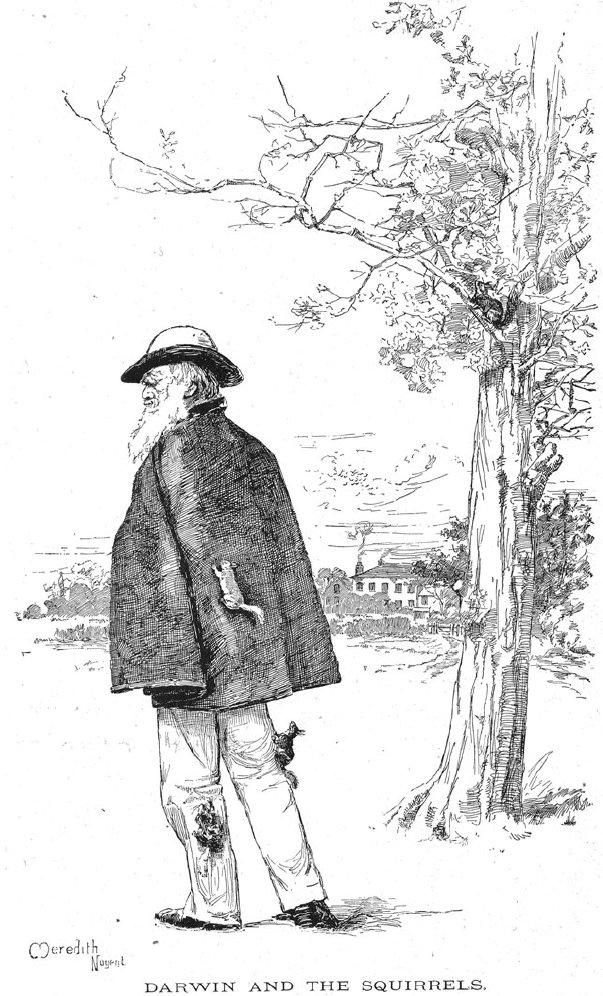
Figure 2. Darwin as field naturalist, from Holder (1891)
What Darwin Believed
Darwin’s religious views were a subject of intense public interest and considerable ambiguity throughout and after his lifetime. In an 1879 letter he stated that he had been a theist while writing the Origin but had since become an agnostic. On the concept of an intelligent God, he displayed characteristic scepticism: “Can the mind of man, which has, as I fully believe, been developed from a mind as low as that possessed by the lowest animals, be trusted when it draws such grand conclusions?” His religious views remained something of a taboo subject; his son Francis carefully selected the letters published in the Life and Letters to maximise the public’s favourable impression of his character, and the early biographies disagreed sharply on what he had actually believed. The question was not resolved in his lifetime and has not been settled since.
The deeply religious philosopher James Hutchison Stirling called Darwin an attention-seeking “arch little rogue” and a demonic High Priest of materialism. Most others cast him in very different terms. Ernst Mayr summarised the broader social opposition with characteristic economy: “No other work advertised to the world the emancipation of science from philosophy as blatantly as Darwin’s Origin. For this he has not been forgiven to this day.”
Darwin’s Biographers
The ten biographical books published in the eighteen years after Darwin’s death illuminate as much about late Victorian intellectual culture as they do about Darwin himself, and their conclusions shaped the image we carry today.
The Romantic Scientist vs. the Victorian Experimentalist
In the 18th and early 19th century, science was understood as advancing by flashes of genius: an apple falls on Newton’s head; William Herschel identifies a new planet without prior calculation. The Victorian era was in the process of replacing that image with a different one: the methodical working scientist, conducting slow, thorough experiments, setting aside his opinions in favour of the evidence. The natural historian, ordering nature from a natural theology perspective, was being displaced by the biologist, studying organisms for their own sake.
These two images competed in the first Darwin biographies. On one side stood the observational naturalist: Louis Compton Miall (1842–1921) and Charles Frederick Holder (1851–1915) emphasised Darwin’s fieldwork and descriptive powers, portraying him as someone whose attention to nature’s intricacies had effectively taught the world how to look at life. “Nothing escaped his watchful eye,” wrote Holder (p. v). On the other side stood the experimentalist: Francis Darwin and Huxley, who emphasised long hours in isolation and a sustained, almost dogged persistence in forcing nature to reveal its mechanisms.
Edward Bagnall Poulton (1856–1943) reconciled the two most convincingly in his 1896 Charles Darwin and the Theory of Natural Selection. The Beagle observations were the raw material, but they were not sufficient on their own: “Powers of observation, however acute, could never make a scientific discoverer; for discovery requires the creative effort of the imagination.” The imagination expressed itself in Darwin the experimentalist. Poulton also dispensed entirely with natural theology, which marked a shift in what was politically possible by 1896: the facts were settled enough that a biologist no longer needed to hedge.
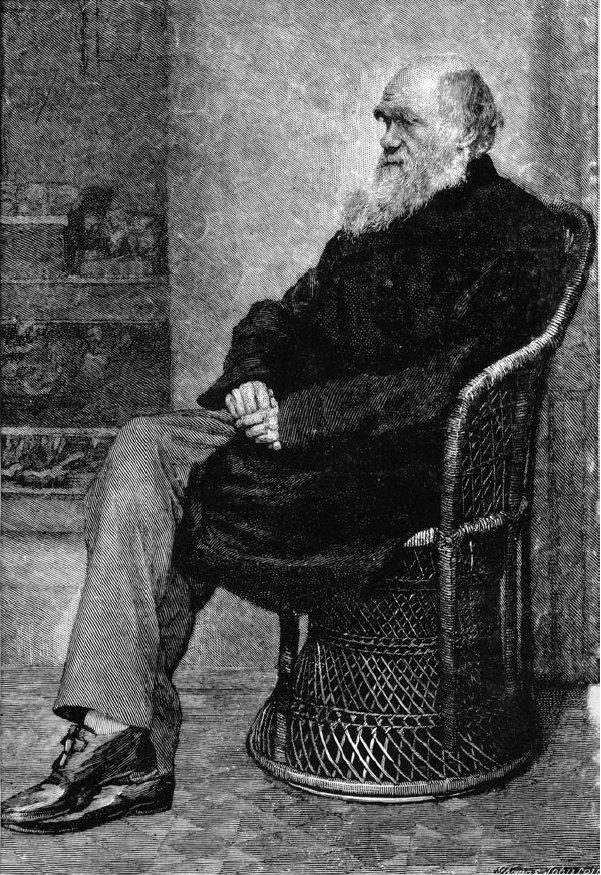
Figure 3. Darwin as moral exemplar: the respectable, gentlemanly unbeliever
The Canonisation Problem
Three themes dominate all the early biographies: Darwin as scientist, Darwin’s character, and Darwin’s beliefs. Much of what was written about his character shades into hagiography. Mawer’s biography states that Darwin “was destined to become the most illustrious of the good and noble since Jesus and Socrates”, which is less a biographical judgement than a political one: his critics were motivated largely by religious objections rather than scientific ones, and portraying Darwin as unimpeachably virtuous was a response in kind. The critics of his theory were, at the time, not especially scientifically serious, and their objections were correspondingly not especially scientific; the biographers were in the business of constructing a secular saint to counter the widespread assumption that only Christians could be morally serious people.
The early biographies, in order:
- Louis Compton Miall. Life and Work of Charles Darwin, 1883.
- George Washington Bacon. The Life of Charles Darwin with British Opinion on Evolution, 1883.
- Grant Allen (1849–1899). Charles Darwin, 1885.
- George Thomas Bettany (1850–1891). Life of Charles Darwin, 1887.
These were followed by Francis Darwin‘s Life and Letters of Charles Darwin (1887), which showed how Darwin wrestled personally with his theory and worked to “force the truth to reveal itself” (Darwin, 1887, p. 149). The second wave attempted to decouple Darwin the person from his theory:
- Walter Mawer. Truth for Its Own Sake: The Story of Charles Darwin Written for Young People, 1889.
- Charles Frederick Holder (1851–1915). Charles Darwin: His Life and Work, 1891.
- Earnest Albert Parkyn. Darwin: His Work and Influence, 1894.
- James Hutchison Stirling (1820–1909). Darwinianism: Workmen and Work, 1894.
- Edward Bagnall Poulton (1856–1943). Charles Darwin and the Theory of Natural Selection, 1896.
The public image of Darwin stabilised around the time of Mendel’s rediscovery in 1900 (by Hugo de Vries, Carl Correns, and Erich von Tschermak) and the 50th anniversary celebrations of 1909, and it has not substantially changed since.
The Beagle Voyage
The HMS Beagle carried 75 people, was captained by Robert FitzRoy (only four years older than Darwin), and had been despatched to chart the South American coastline and take longitude measurements with improved instruments. The voyage had nothing to do with biology; Darwin was not even the official naturalist until Robert McCormick left the ship in Rio de Janeiro. FitzRoy had asked Darwin’s botany professor John Stevens Henslow to recommend a companion for the journey (captains were not supposed to converse with sailors, and the social isolation was a genuine problem). Henslow recommended Darwin.
Darwin brought with him a small 6×4 inch microscope, a compass, a taxidermy manual, a geological hammer, a Bible, Milton’s Paradise Lost, the first volume of Lyell’s Principles of Geology (the second and third arriving later), a magnifying glass, quantities of alcohol for preserving specimens, and Alexander von Humboldt’s Personal Narrative. He was seasick throughout the entire voyage, sometimes spending days eating only raisins, which is why he spent as much time on land as possible and why he never left England again after returning.
The voyage lasted four years, nine months, and two days. The first stop was St. Jago in the Cape Verde Islands, where he found fossilised shells of species apparently identical to those living on the current beach. Sixty-three days after departure they anchored in Bahia, where Darwin ate his first banana and disliked it (“maukish and sweet with little flavor”). He also encountered slavery, and wrote against it without qualification, as he did against the genocide of indigenous peoples by colonists. At Punta Alta and Monte Hermoso came significant fossil finds: giant extinct mammals, including what would be identified as a giant ground sloth, whose morphological relationship to living South American forms set him thinking about replacement and continuity between geological epochs.
The Galápagos and Transmutational Thinking
From 15 September to 20 October 1835, Darwin was on the Galápagos Islands, and the five weeks he spent there were, by his own account, the most influential on his subsequent thinking. Three observations, in particular, accumulated into something he could not ignore.
First, closely related populations varied in appearance across islands: comparing mockingbirds from Charles Island, Albemarle Island, and James and Chatham Islands, he discovered that each belonged to a distinct species of Mimus. Second, he noticed that populations’ affinities were determined by biogeography rather than by physical conditions: the Cape Verde Islands and the Galápagos share similar environments, but their faunas bear the respective imprints of Africa and South America. Third, after returning to England, the ornithologist John Gould confirmed that the various birds Darwin had collected on the Galápagos all belonged to a single family: “Seeing this gradation and diversity of structure in one small, intimately related group of birds, one might really fancy that from an original paucity of birds in this archipelago, one species has been taken and modified for different ends.”
Islands, it turns out, are ideally suited for provoking transmutational thinking: they compress into small areas the effects of isolation, colonisation, and long-term divergence that are harder to detect across continents. Darwin noted the evolution of flightlessness in island birds and insects. He also noted the tameness of island vertebrates, the loss of dispersal abilities in island land animals and plants, and the unusual character of island floras.
On the question of when exactly Darwin’s conversion to transmutation occurred, the evidence is genuinely contradictory. He told the German naturalist Otto Zacharias in 1877 that he had believed in the permanence of species throughout the Beagle voyage, only opening his first transmutation notebook in July 1837. But transmutational thinking can be traced in the diary entries from Bahia, where he noted that a snake he caught there “marks the passage between the common venomous and the rattlesnakes”, its tail terminated by a hard oval point that it vibrated as a rattle; in his zoological notes, he went further, describing how the snake “both in structure and habits connect Crotalus and Vipera.” Whether he was personally convinced of transmutation at the time, or whether the intellectual framework was simply assembling itself without his quite noticing, we cannot know. Whatever the precise timing, his complete conversion is unambiguous from the opening of the first transmutation notebook in July 1837.
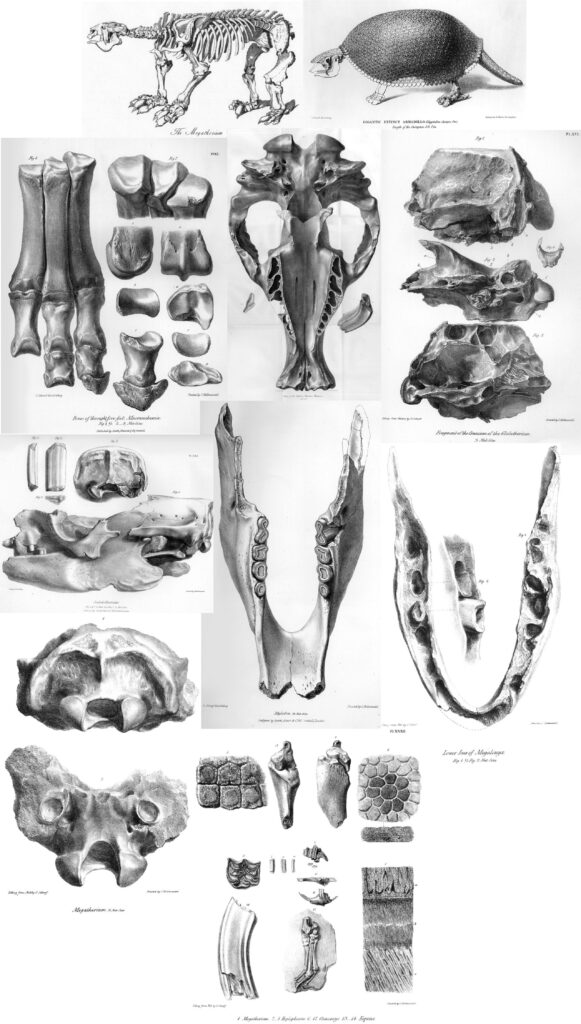
Figure 4. Some vertebrate fossils collected by Darwin
Darwin was also one of the first to study aerobiology, collecting air samples at sea and finding “17 different organic forms”; these samples were re-examined recently, and the organisms were still viable (Gorbushina et al., 2007).
For the full texture of his observations, the Voyage of the Beagle is the appropriate starting point. It reads, quite genuinely, as a travel guide written by someone who looked at everything, and it allows the reader to trace how the pieces were falling into place in real time. Read it before the Origin, the intellectual sequence is illuminating.
Writing the Origin
In 1844, Robert Chambers published Vestiges of the Natural History of Creation. The scientific establishment received it with hostility. The reviews were devastating. This made Darwin nervous, since by then he had completed two sketches of his own On the Origin of Species, and Vestiges was full of exactly the kind of speculation and error that would give opponents easy targets. He responded by spending years establishing himself as a thoroughly credible scientist: his four-volume monograph on barnacles, completed in 1854, culminated in a Royal Society Medal and cemented his reputation. He also continued accumulating evidence, writing to William Darwin Fox in 1855 that he was “collecting and comparing” his notes from the Beagle voyage in preparation for writing a book examining the evidence for and against the immutability of species.
The Origin was not Darwin’s planned magnum opus. It was, as he put it himself, an abstract, rushed into existence by the arrival of a letter from Alfred Russel Wallace in 1858, enclosing a manuscript that contained a theory of natural selection identical in its essentials to his own. Like Darwin, Wallace had been reading Malthus. Darwin asked Charles Lyell (1797–1875) and Joseph Dalton Hooker (1817–1911) to read both manuscripts at a meeting of the Linnean Society; the reception was cold. Darwin then accelerated the abstract, writing to Wallace in January 1859: “I look at my own career as nearly run out. If I can publish my Abstract and perhaps my greater work on same subject, I shall look at my course as done.” In November 1859, On the Origin of Species was published. The planned “big book”, Natural Selection, was never completed; what survives was transcribed and assembled by R. C. Stauffer and published in 1975 as Charles Darwin’s Natural Selection: Being the Second Part of His Big Species Book Written from 1856 to 1858. Mayr’s assessment was apt: “Darwin presented his reasoning and his evidence in far greater detail than in the Origin of Species. This permits a new and indeed more definitive analysis.”
The Origin contains no references, a consequence of its origin as a rushed abstract. It also is, famously, not particularly focused on the origin of species per se. Huxley and Romanes noted the discrepancy between title and content from the beginning; Mayr elaborated it thoroughly much later. Darwin was aware of the problem: species, in his own theory, are a continuous reality in the process of becoming, not the fixed building blocks the title implies. He told Hooker in 1856 that the term “species” was “undefinable”, and in that admission lies much of the conceptual tension that would occupy evolutionary biology for the next century and a half.
A note on the last paragraph of the Origin, with its reference to the Creator: this passage was not present in the first edition. Darwin added it under political pressure in subsequent editions, and he later regretted it, writing to Hooker in 1863: “I have long regretted that I truckled to public opinion, and used the Pentateuchal term of creation, by which I really meant ‘appeared’ by some wholly unknown process.” The emendation was not representative of his thinking.
Natural Selection: The Mechanism
Speciation
Speciation is, as Mayr famously put it, “the single most important event in evolution” (Mayr, 1963, p. 11). Darwin’s theory explains how populations change morphologically and ecologically as the environment changes; speciation is the end point, varieties accumulating differences until the boundary between variety and species becomes, retrospectively, visible. What Darwin did not adequately account for was the role of geographical isolation; his treatment of speciation was, in the retrospective view of Mayr and others, genuinely muddled. As some unnamed biologist once observed: “Sometimes I think that Darwin, at least on speciation, is like the Bible: one can buttress any view by choosing the right quotations.”
The word “evolution” itself was not Darwin’s preferred term. He favoured “descent with modification”; “evolution” had been appropriated by embryologists including Haeckel to describe ontogeny, and carried earlier connotations of the literal unrolling of a pre-formed organism (the preformationist tradition). By the sixth edition of the Origin, Darwin had accepted it, persuaded by Spencer’s usage.
Adaptationism and its Limits
On adaptationism, Darwin was more nuanced than the tradition that claims his authority usually acknowledges. He thought genealogically about adaptation: a trait is adaptive if it has been maintained across generations, and the null hypothesis is that a feature is not adaptive. In that framing, he already had the intuition of the neutral trait, and found it troubling for his theory: how could characters that selection was indifferent to have persisted? The modern answer is that neutral and nearly-neutral variants are the default, persisting by genetic drift; Darwin did not have this framework, but the problem’s shape was visible to him.
He also acknowledged altruism, particularly in the case of sterile workers in eusocial insect colonies, as a genuine difficulty for his theory. His resolution was colony-level selection: groups with a higher proportion of altruists would outcompete groups with fewer. He was invoking what would now be called multilevel selection, and doing so for the right reasons.
Darwin and the Fossil Record
Darwin’s treatment of the fossil record in the Origin is often misread as simply pessimistic. Chapter 9 (“On the Imperfection of the Geological Record”) laments the absence of finely graded transitional series: “Geology assuredly does not reveal any such finely graduated organic chain; and this, perhaps, is the most obvious and serious objection which can be urged against the theory.” But some hundred pages later he states that “all the other great leading facts in palaeontology seem to me simply to follow on the theory of descent with modification through natural selection.” The two statements are not in contradiction. At fine resolution, the record was inadequate for testing gradual change; at coarser resolution, the broad patterns of succession, replacement, and affinity across geological time supported his theory. That view was reasonable given the state of palaeontology in 1859, and later developments have largely confirmed it: large-scale patterns are robust; the detailed succession within lineages requires, and has received, more careful analysis.
Darwin’s views on extinction were similarly considered. He endorsed Cuvier‘s position that extinctions were real events, against contemporaries who thought fossil forms were either still living in unexplored regions (Thomas Jefferson expected Lewis and Clark to return with accounts of living mammoths) or had gradually transformed into modern species (Lamarck’s view). He attributed background extinction rates to biotic interactions, particularly competition. He was also prescient about the geography of extinction, noting in the Descent of Man that populations under pressure retreat to remote and isolated areas, persisting longest at the margins of their former distributions; this pattern is now well-documented in conservation biology.
Darwin and Genetics
Darwin had no knowledge of genetics. He did, however, envision heritable particles: he called these “gemmules”, operating under “blending inheritance”, the idea being that the gemmules of parents blended in the offspring. These are vague enough to constitute merely the intuition that heritable particles must exist; Gregor Mendel‘s work was essentially the mathematical quantification of that intuition, and Erwin Schrödinger‘s What Is Life? (1944) was the speculation about their physical nature, finally resolved by the Watson-Crick-Franklin-Wilkins DNA model.
The question of why Darwin never arrived at Mendel’s laws, despite performing plant fertilisation experiments that produced the same ratios, has a straightforward answer: he was not asking the question Mendel was asking. In The Effects of Cross and Self-Fertilisation in the Vegetable Kingdom, Darwin was testing whether self-fertilised progeny are less fit than cross-fertilised ones. He was measuring survival and competitive ability, not trying to understand the transmission of individual characters. The ratios were in front of him, but they were not the variable he was measuring. Criticising him for failing to see what he was not looking for is anachronistic, and anachronism of this kind is the original sin of internalist history of science. He also had little mathematical training, unlike Mendel, which almost certainly played a role.
The Anti-Darwinian Phase and the Road to the Modern Synthesis
The rediscovery of Mendel’s laws in 1900 by Hugo de Vries, Carl Correns, and Erich von Tschermak did not immediately reinforce Darwinism. The early geneticists, including de Vries, William Bateson, and Richard Goldschmidt (1878–1958), were sceptical of natural selection and emphasised the primacy of mutation instead. De Vries concluded from his own flower experiments that evolution proceeded by saltation, by spontaneous large mutations rather than gradual accumulation of small differences. Goldschmidt used this as the basis for his hopeful monsters theory: that single large mutations could produce major adaptive changes. Until the 1930s, natural selection was largely marginalised, and quasi-Lamarckian theories with orthogenetic flavours dominated in several national traditions, persisting until the 1960s in France and the Soviet Union. The historian of biology Erik Nordenskiöld wrote in 1929 that natural selection “does not operate in the form imagined by Darwin”; a 1925 multi-author volume called Evolution in the Light of Modern Knowledge did not mention natural selection at all.
It was not until the Modern Synthesis of the 1930s and 1940s, the unification of Darwinism with Mendelian genetics, population genetics (from R. A. Fisher, J. B. S. Haldane, and Sewall Wright), phylogenetics, and palaeontology (from George Gaylord Simpson), that natural selection was restored to its central position. Julian Huxley and Ernst Mayr were the primary architects of this synthesis. The relationship between the Modern Synthesis and Darwin’s original theory is complicated: it vindicated natural selection while simultaneously narrowing the theory in ways that would later require correction, particularly by excluding development, macroevolution, and non-genetic inheritance from its scope. That correction continues (see Appendix 2).
Sexual Selection
Sexual selection is arguably Darwin’s second most important contribution, and unambiguously his own discovery. Darwin treated it as a process operating distinctly from standard natural selection: females develop preferences for particular male characters (elaborate plumage, complex songs) regardless of whether those characters are directly adaptive. Wallace’s competing view was that sexual selection is subsumed within natural selection, and that apparently non-adaptive preferred characters are honest signals of underlying genetic quality. Wallace’s view dominated for roughly a century; the recent rehabilitation of Darwinian mate choice as a genuine phenomenon in its own right has required considerable empirical effort.
Darwin’s application of sexual selection to human skin colour is a case where his commitment to the concept led him astray. He attributed differences in human skin colour to differential mate preferences rather than to adaptation to solar radiation, departing from a conclusion that had been available since Hippocrates and demonstrated quantitatively by John Mitchell and Samuel Stanhope Smith in the mid-18th century. He had reasons beyond theory: the attribution of racial differences to natural adaptation carried, in the context of 19th-century slavery, the implication that different human populations might be distinct species adapted to different environments, a conclusion Darwin was vehemently opposed to on scientific and moral grounds. His insistence on sexual selection as an explanation was partly a political manoeuvre to deny that implication. The scientific cost was real; the motivation was defensible.
Darwin the Botanist
Darwin may be known principally as an evolutionary biologist, but he was also, by any measure, a serious plant biologist. He told Hooker that “Nothing in my life has ever interested me more than the fertilisation of plants.” Inspired partly by Christian Sprengel‘s 1793 Das entdeckte Geheimnis der Natur, in which Sprengel noted that “It appears that nature has not willed that any one flower should be fertilised by its own pollen”, Darwin spent years documenting plant adaptations against self-fertilisation, knowing from his own domestication experiments the fitness consequences of inbreeding. His Climbing Plants (1867) established his reputation as a plant physiologist; subsequent work on plant movement culminated in his circumnutation theory, proposing that specialised movements such as tropisms evolved from a basic oscillatory movement. The raw empirical observations are excellent; the theoretical synthesis has been superseded. He also published on insectivorous plants (1875) and on different flower forms (1877); the latter contains genetic data, in the dimorphism of Primula, that he had no framework to recognise as such.
The “Abominable Mystery” and Angiosperm Co-evolution
The “abominable mystery” of angiosperm origins is Darwin’s phrase, from an 1879 letter to Hooker commenting on an essay by John Ball on the origin of the European alpine flora. It is quoted in almost every paper on the subject, and its meaning is routinely misread. Darwin was not puzzled by the phylogenetic relationships of flowering plants to other plant groups. He was disturbed by their apparent rapidity of diversification: rich mid- to Late Cretaceous angiosperm assemblages with no apparent Early Cretaceous precursors, which seemed to require exactly the kind of sudden origin his gradualism was committed to denying. The issue was rate, not phylogeny.
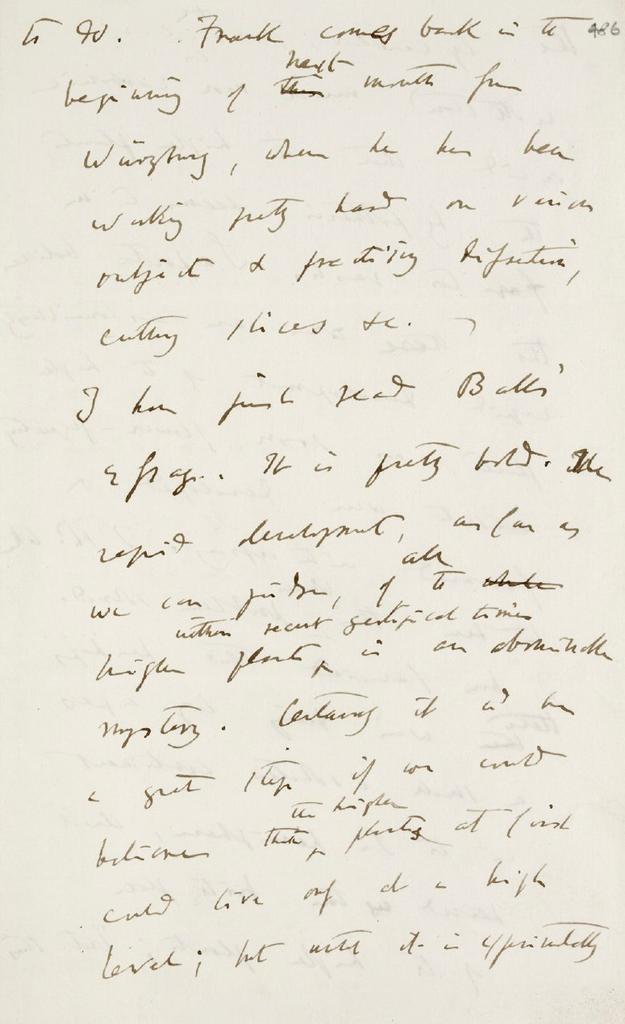
Figure 5. Darwin’s handwritten letter containing the “abominable mystery” passage.
His proposed solution, which he admitted was a “wretchedly poor conjecture”, was that angiosperms had evolved gradually on an isolated microcontinent, then spread across the continents when geological changes allowed dispersal. It was a placeholder for missing data.
The French palaeobotanist Gaston de Saporta, in an 1877 letter to Darwin, proposed that the diversification of angiosperms and of nectar- and pollen-feeding insects were coupled: each drove the other, so that neither could diversify substantially without the other. Angiosperms could not develop their characteristic floral elaboration without insect pollinators; those pollinators could not specialise without the floral resources. Darwin recognised the hypothesis immediately: “Your idea that dicotyledonous plants were not developed in force until sucking insects had been evolved seems to me a splendid one. I am surprised that the idea never occurred to me … it goes much further and is much more important.” De Saporta published the hypothesis in his 1885 L’Évolution du Règne Végétal. Subsequent research has not produced a hypothesis of comparable explanatory scope.
What Darwin’s “abominable mystery” was pointing to has been substantially resolved: the fossil record now documents gradual and orderly angiosperm diversification in the Early Cretaceous, a result of the last thirty years of palaeobotanical work. Had Darwin been alive to see it, his particular formulation of the problem would have dissolved. The co-evolutionary hypothesis, on the other hand, has grown more robust with time.
On the Origin of Life
Darwin was careful, explicit, and consistently honest about the limits of his theory with respect to the origin of life. He stated in 1839 that his theory “leaves quite untouched the question of spontaneous generation”, and told George Charles Wallich that he “had intentionally left the question of the Origin of Life uncanvassed as being altogether ultra vires in the present state of information.” His critics were disappointed: Haeckel wrote in 1862 that “He assumes a special creative act for this first species; he is not consistent, and, I think, not quite sincere.” George Heinrich Bronn, the geologist who translated the Origin into German, simply appended a chapter describing how natural selection leads to the origin of life. Darwin was unimpressed: “He sticks to Priestley’s green matter and seems to think that till it can be shown how life arises, it is no good showing how the forms of life arise. This seems to me about as logical as to say it was no use in Newton showing laws of attraction of gravity and consequent movements of the Planets, because he could not show what the attraction of Gravity is.”
Darwin’s own positive view is most famous from a letter to Hooker in 1871: “It is often said that all the conditions for the first production of a living organism are now present, which could ever have been present. But if (and oh! What a big if) we could conceive in some warm little pond, with all sorts of ammonia and phosphoric salts, light, heat, electricity, &c., present, that a protein compound was chemically formed ready to undergo still more complex changes, at the present day such matter would be instantly devoured or absorbed, which would not have been the case before living creatures were formed.” The “warm little pond” scenario continues to be taken seriously by origin-of-life researchers, though it has many competitors.
The most comprehensive statement of his views is the reply he published in The Athenaeum responding to Richard Owen‘s claim that foraminifera spontaneously arise from mud. Owen had also sneered at the Creator language in the Origin; Darwin’s reply dealt with both points. The full text is worth reading: it is clear, evidentially grounded, patient to the point where the patience itself becomes pointed, and it concludes that “the nature of life will not be seized on by assuming that Foraminifera are periodically generated from slime or ooze.” He expected, with characteristic equanimity, to die without the question resolved: “I should like to live to see Archebiosis proved true, for it would be a discovery of transcendent importance; or, if false, I should like to see it disproved, and the facts otherwise explained; but I shall not live to see all this.”
Darwin never mentions bacteria in any of his books. It was Haeckel and the Russian biologist Constantin Mereschkowsky (1855–1921), originator of an early form of the symbiogenesis concept, who first attempted to place microorganisms on the tree of life.
The Tree of Life
The tree of life was not Darwin’s metaphor originally. Peter Simon Pallas (1741–1811) used it in 1787 to portray the system of nature; Lamarck also used tree diagrams to illustrate his transmutation concepts. What Darwin contributed was not the metaphor but the systematic argument for why genealogical relationships should be the organising principle of all biological classification.
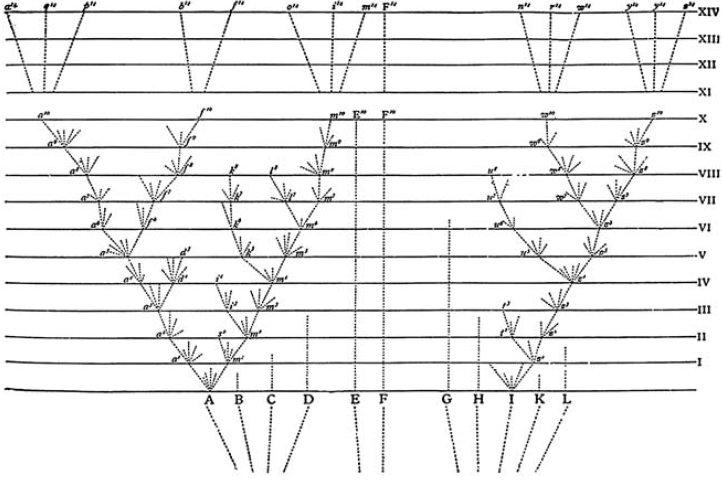
Figure 6. Darwin’s tree of life, the only illustration in the first edition of the Origin of Species.
This genealogical thinking is, in retrospect, Darwin’s most durable contribution to the structure of biology, arguably more fundamental even than natural selection. Natural selection was a mechanism waiting to be discovered; the conceptual landscape of the time made it available, and someone would likely have found it. The genealogical reorientation of biology was harder to achieve. Before Darwin, systematists were looking for laws and types: organisms were deviations from a Bauplan, and the goal of taxonomy was to reconstruct ideal forms. Darwin made that project incoherent. Organisms are the products of a long historical development, partly recorded in the fossil record. Whales are mammals, birds are dinosaurs, octopuses are molluscs: all of these phylogenetic identifications would have been meaningless before Darwinian genealogical thinking made them the natural kind of statement that biological classification should produce. The question shifted from “What is the true nature of this structure?” to “What was the previous state of this structure?” Biological diversity ceased to be a set of transformations and became the product of history.
The old scala naturae, the gradation from simple to complex, was simultaneously made obsolete. Darwin’s instruction was clear enough to underline in a notebook entry: “Never use the words higher or lower.” The appropriate terms are “ancestral” and “derived.”
Darwin and Soil Science
One field that almost no one associates with Darwin is pedology. His last book, The Formation of Vegetable Mould through the Action of Worms (1881), was also his most commercially successful on publication. Darwin quantified the role of earthworms in soil production at his Down House property over thirty years, tracking the sinking of cobbles placed at ground level and using the burial rates of Roman and Druidical artefacts to calculate soil turnover rates across centuries. It was among the first scientifically rigorous studies of soil formation, and it remains a model of the virtues of patience and sustained attention.
Darwin’s Enduring Legacy
The scale of Darwin’s influence is visible in how his intellectual descendants label themselves. Evolutionary biologists still classify their positions as “Darwinian”, “ultra-Darwinian”, “neo-Darwinian”, “anti-Darwinian”, or “post-neo-Darwinian”: a naming practice without real parallel in other sciences. There is no Einsteinian quantum physics; Newton has Newtonian mechanics, Mendel has Mendelian genetics. Darwin has an entire taxonomic tree of positions named in relation to him, which is perhaps the most accurate measure of how central his framework remains: not a foundation that has been superseded, but one that is still being actively contested and extended. The Origin is, uniquely among scientific works of its age, still assigned reading for biologists. A survey of the taxonomic literature finds numerous species named after Darwin, and this will continue for the foreseeable future. The last paragraph of the Origin continues to move people to study biology.
Darwin predicted that “much light will be thrown on the origin of man and his history.” He also predicted, without any human fossil evidence to guide him, that Africa would prove to be the cradle of humankind, an inference from living comparative anatomy alone. He was, as he said of himself in a different context, not afraid of following the evidence wherever it led, and not afraid of admitting when he could not yet see where it was going.
The concept of evolution has evolved considerably since 1859. The Modern Synthesis revised it; the Extended Evolutionary Synthesis is revising it again. That these revisions are still framed as modifications to a framework Darwin established, over 150 years later, is the most unambiguous measure of what he achieved.
Appendix 1: The Malthusian Rule
From Thomas Malthus, An Essay on the Principle of Population (1798):
“The power of population is indefinitely greater than the power of the earth to produce subsistence for man. Population, when unchecked, increases in a geometrical ratio. Subsistence increases only in an arithmetical ratio. […] By that law of our nature which makes food necessary for the life of man, the effects of these two unequal powers must be kept equal. This implies a strong and constantly operating check on population from the difficulty of subsistence. This difficulty must fall somewhere and must necessarily be severely felt by a large portion of mankind.”
Appendix 2: Darwinism and its Descendants
“Darwinism” covers six related but distinct theories, the first five published in the Origin and the sixth in the Descent of Man:
- Species change through time and are not static.
- All species are descended from common ancestors.
- Diverged species accumulate differences over time.
- These changes occur in small steps (gradualism), rather than by sudden saltation.
- Natural selection preserves favourable heritable variations and eliminates injurious ones. (This has been called a tautology, a charge first made by Karl Popper in 1975, which he retracted in 1978; the misunderstanding stems from a false assumption that evolution has a direction.)
- Sexual selection: competition between sexes is an additional evolutionary force.
“Neo-Darwinism” as a term was introduced by George John Romanes to describe Wallace‘s version of evolutionary theory, the key difference being that Wallace rejected Lamarckian inheritance while Darwin accepted a limited version of it. August Weismann was the most prominent neo-Darwinist of that generation; he was the first to demonstrate the distinction between germ cells and somatic cells, showing that Lamarckian inheritance of acquired characters is mechanistically impossible in animals.
The term is now associated with the Modern Synthesis: the 1940s unification of Darwinism with Mendelian genetics, population genetics (from Fisher, Haldane, and Wright), phylogenetics, and palaeontology (from Simpson), constructed primarily by Julian Huxley and Ernst Mayr.
References
Darwin F. (ed.). 1887. The Life and Letters of Charles Darwin, Including an Autobiographical Chapter, 3rd ed., vol. 1.
Davies R. 2008. The Darwin Conspiracy. Golden Square Books.
Gorbushina AA, Kort R, Schulte A, Lazarus D, Schnetger B, Brumsack HJ, Broughton WJ & Favet J. 2007. Life in Darwin’s dust: intercontinental transport and survival of microbes in the nineteenth century. Environmental Microbiology 9, 2911–2922.
Gregory TR. 2009. Understanding Natural Selection: Essential Concepts and General Misconceptions. Evolution: Education and Outreach 2, 156–175.
Holder CF. 1891. Charles Darwin: His Life and Work.
Mayr E. 1963. Animal Species and Evolution. Harvard University Press.
Wainwright M. 2010. The origin of species without Darwin and Wallace. Saudi Journal of Biological Sciences 17, 187–204.
Further Reading
Browne J. 1995. Charles Darwin: Voyaging. Jonathan Cape.
Browne J. 2002. Charles Darwin: The Power of Place. Jonathan Cape.
Charlesworth B & Charlesworth D. 2009. Darwin and Genetics. Genetics 183, 757-766.
Darwin C. 1845. The Voyage of the Beagle. John Murray. (Read this before the Origin.)
Darwin C. 1859. On the Origin of Species.
Darwin C. 1871. The Descent of Man, and Selection in Relation to Sex. John Murray.
Desmond A & Moore J. 1991. Darwin: The Life of a Tormented Evolutionist. Viking Penguin.
Friedman WE. 2009. The meaning of Darwin’s “abominable mystery”. American Journal of Botany 96, 5-21.
Gould SJ. 2002. The Structure of Evolutionary Theory. Belknap Press.
Mayr E. 1982. The Growth of Biological Thought. Harvard University Press.
Prum RO. 2017. The Evolution of Beauty: How Darwin’s Forgotten Theory of Mate Choice Shapes the Animal World and Us. Doubleday.
Quammen D. 2006. The Reluctant Mr. Darwin: An Intimate Portrait of Charles Darwin and the Making of His Theory of Evolution. Atlas Books / Norton.
Secord JA. 2000. Victorian Sensation: The Extraordinary Publication, Reception, and Secret Authorship of Vestiges of the Natural History of Creation. University of Chicago Press.
Stott R. 2012. Darwin’s Ghosts: The Secret History of Evolution. Spiegel & Grau.